A president can stand at a podium and declare diversity and inclusion “over.”That does not make it so.
A president can stand at a podium and declare diversity and inclusion “over.”That does not make it so.
You don’t end inclusion with a speech. You don’t erase people with a declaration. What statements like this really do is reveal something else. They show who feels threatened by a more equal society. They signal who believes belonging is conditional. They tell us how power sees itself, and who it thinks should be quiet.
That should concern all of us. Not because of politics, but because of values.
That should concern all of us. Not because of politics, but because of values.
Black History Month exists for a reason. It reminds us that progress has never been inevitable, and that rights once denied are rarely protected by silence. Declaring inclusion “over” during a month meant to remember why it exists is not a strength. It is a failure to understand history.
During his 2026 State of the Union address on February 24, President Donald Trump declared early in the speech, “We ended DEI in America.” It was not an aside. It was a statement of intent. The line came shortly after he touted job creation and regulatory rollbacks, and it was framed as a clear accomplishment of his administration’s first year.
The words reflected action. Within days of taking office in January 2025, executive orders dismantled Diversity, Equity, and Inclusion programs across the federal government. DEI offices and roles were eliminated. Agencies were instructed to terminate DEIA-related contractors. Long-standing affirmative action requirements for federal contractors were rescinded. A federal policy recognizing only two genders for all legal and administrative purposes was enacted.
The message extended beyond government. Federal contractors are now required to certify that they do not operate what the administration defines as “illegal” DEI programs in order to receive payment. The False Claims Act has been positioned as an enforcement tool, placing legal and financial risk on companies that continue these efforts. This is what “DEI is over” means in practice. It is not symbolic. It is structural.
The following day, the rhetoric sharpened. The president directed remarks at sitting members of Congress, Ilhan Omarand Rashida Tlaib, telling them to “go back where they came from” or be sent back to their country of origin.
Both are American citizens. Both were elected by American voters. Both serve in the United States Congress.
This was not a policy disagreement. It was something older.
This was not a policy disagreement. It was something older.
In the days that followed, a familiar argument resurfaced. Diversity and inclusion are framed as anti-white. As quota systems. As efforts to lower standards or hand out unearned advantages.
That framing is wrong.
That framing is wrong.
Diversity and inclusion are not about lowering the bar. They are about removing blinders. They are not about giving degrees to people who did not earn them. They are about ensuring that intelligence, effort, and potential are not dismissed because of skin color, gender, religion, or background. They are not about hiring the wrong person. They are about making sure the right people are not excluded before they ever get a chance to compete.
If you believe in merit, this should matter to you.
If you believe in merit, this should matter to you.
I grew up in New Zealand, and that perspective shapes how I see this debate. New Zealand was the first country in the world to grant women the right to vote. It decriminalized homosexuality decades ago. It formally recognizes Māori rights as foundational to the nation, even as it continues to grapple with the legacy of colonization.
None of those steps erased merit. None weakened standards. They expanded the list of who was allowed to participate. They widened the circle.
The United States tells a parallel story, though with sharper contradictions. It was founded on the principles of freedom of expression and individual liberty. It was also built on slavery, exclusion, and laws that denied full citizenship to millions of people for generations. Both truths are real.
Diversity and inclusion exist because freedom was not applied equally. They are imperfect and incomplete attempts to close a gap created by history, not to punish people living today.
This history is personal to me. My wife is a fourth-generation Japanese American. Her great-great-great-grandparents came to the United States well over a century ago. Her family has lived, worked, paid taxes, and raised children here for generations. Their roots in this country run deep. And yet, she still experiences prejudice.
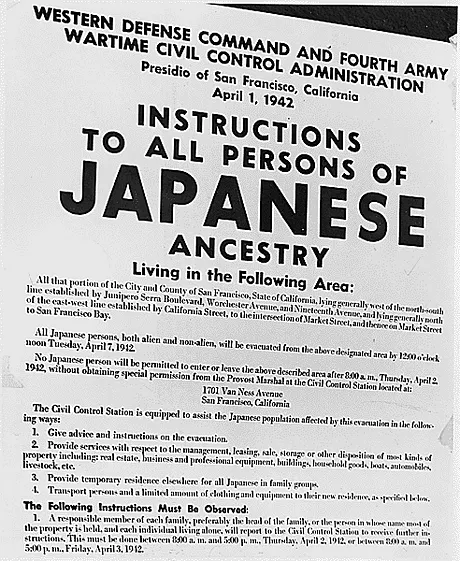
During World War II, her family were American citizens. Despite that, they were forcibly removed from their homes and incarcerated in Japanese American internment camps under Franklin D. Roosevelt’s Executive Order 9066.
Japanese American citizens were forcibly removed and incarcerated under Executive Order 9066, 1942.
No charges were filed. No trials were held. No evidence was required. Families lost their homes, their businesses, and in many cases, everything they had built. This was legal at the time. It was also a profound moral failure. It remains one of the darkest chapters in U.S. history, and it should be taught in every school, not as a footnote, but as a warning.
The justification then was fear. The language was national security. The outcome was collective punishment based solely on ancestry.
History rarely repeats itself exactly, but it does rhyme. When rhetoric narrows who “belongs,” when enforcement expands while due process shrinks, when people are treated as problems first and humans second, the echoes are unmistakable. Agencies like Immigration and Customs Enforcement operate within the law. That does not mean the outcomes are always just, or that the laws themselves cannot drift into moral failure.
Japanese Americans were told it was temporary. They were told it was necessary. They were told it was for the greater good. They lost everything anyway.
This is why telling Americans to “go back where they came from” is not just offensive. It is dangerous. That phrase has never been about geography. It has always been about power. About who is allowed to belong. About who is permitted to speak.
It is worth asking what Martin Luther King Jr. would think if he were alive today.
The civil rights movement was not about preference. It was about dignity and belonging.
He did not argue for lowered standards. He argued for dignity. He did not ask for special treatment. He asked for fairness. He spoke about judging people by the content of their character. That requires openness. It requires humility. It requires confronting bias, especially when it is comfortable to deny it.
Diversity and inclusion are not radical ideas. They are moral ones. They ask a simple question. Are we willing to treat every person as fully human, even when doing so costs comfort, certainty, or control?
You don’t end inclusion with a speech. You don’t erase people with a declaration.
A confident nation expands the circle. It does not shrink it. And it does not fear inclusion. It proves itself through it.
Author’s Note
This blog post grew out of a short Facebook and Reddit post I wrote after the State of the Union. I did not expect the response it received. The volume and intensity of the reactions made something clear. Many people are not arguing about policy. They are arguing about belonging. This longer piece is an attempt to slow the conversation down, add history and lived experience, and explain why inclusion is not a threat, but a safeguard.